企業結算:穩定幣還是代幣化存款?
Enterprise settlement
- Krzysztof Urbanski L2BEAT/Enterprise Ethereum Alliance
- Tushar Gulhane SAP
- Mai Kaneko DCP
- Sanchit Mall Visa
- Naojiro Hisada 樂天
影片
影片與逐字稿來源:Stablecoin Summit 直播
從 2:10:01 開始播放
場次摘要
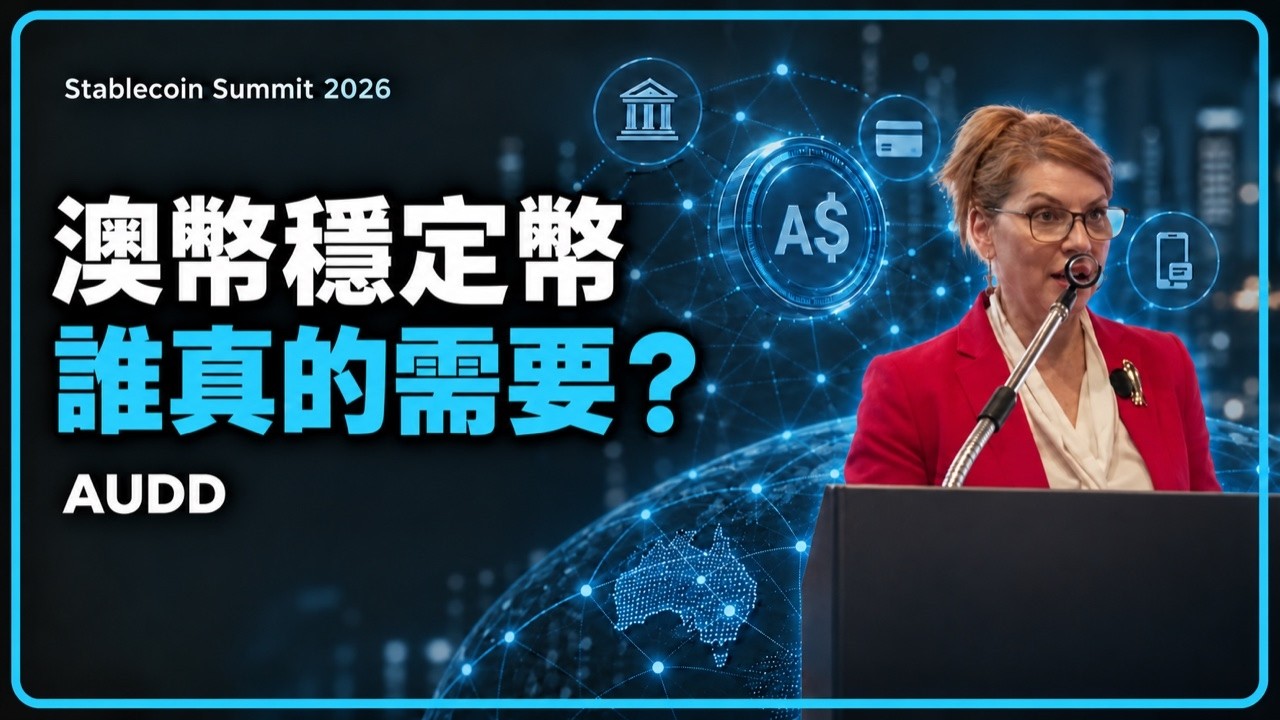
這場座談用日本零件商的付款需求,比較穩定幣與代幣化銀行存款。DCP 的講者說,多銀行存款平台已運作兩年,演講時預計下個月加入日本郵政銀行;但銀行存款代幣仍受跨行界線限制。另一邊,日本穩定幣有 100 萬日圓上限,未必適合大額企業付款。Visa 的講者說,該公司穩定幣結算量從上一年約 2 億美元,增至演講當年已完成約 100 億美元。
值得記下的 5 件事
- DCP 當時已營運兩年,預計下月接入日本郵政銀行;2028 年度超過 30 家發行銀行仍是目標。
- 多數代幣化存款仍限於單一銀行系統,企業跨銀行轉帳還有缺口。
- 日本當時流通穩定幣的 100 萬日圓上限,限制大額企業付款用途。
- Visa 當年已完成約 100 億美元穩定幣結算,較前一年約 2 億美元增加(演講當時數字)。
- AI 企業付款先要納入財務政策與 ERP 控制,再由代理人執行、人工授權。
逐字稿
開場:企業要選哪一種數位貨幣
大家好。我是 Krzysztof Urbanski。很榮幸能來到這場會議,我代表 L2BEAT,也代表 Enterprise Ethereum Alliance,今天很榮幸擔任這個 panel 的主持人。先讓我稍微鋪一下背景。所以兩年前,這類活動上的問題是,企業到底會不會碰穩定幣。今天問題不一樣了。不過以我來看,更難。像是,企業要用哪一種數位貨幣,用在Hello, everyone. My name is Krzysztof Urbanski. I'm honored to be here at this conference, and I represent L2BEAT and also the Enterprise Ethereum Alliance, and I have this great pleasure of moderating this panel today. Let me set the stage first a bit. So two years ago, the question at events like that was whether enterprises would touch stablecoins at all. And today the question is different. However, in my opinion, it's harder. Like, which kind of digital money for
哪一種金流上,而且該在誰的控制之下做?希望我們今天能把這件事談開。先丟幾個數字當背景。穩定幣已經是 3,140 億美元的市場,而且 99.5%,前面某場簡報也提過,是美元穩定幣。真正的支付大概只佔今天鏈上交易量的 1%,但企業對企業是最大的一塊。去年是 206 億美元,成長超過 700%。亞太現在佔已辨識支付金額總量的一半以上。which flow in the enterprise, and under whose control should we do it? And I hope we'll explore this today. A few numbers to set the stage. Stablecoins are already a $314 billion market, and 99.5%, as was mentioned in one of the presentations before, is in USD stablecoins. Real payments are only about 1% of on-chain volume today, but business-to-business is the biggest slice. It's $20.6 billion last year, up more than 700%. And Asia-Pacific is now more than half of the total volume as identified payment value.
當然,企業正在進來,尤其今年是加密圈的企業年。所以 JPMorgan 的 Kinexys 每天用代幣化存款移動超過 70 億。DBS 和 Citi 上個月完成了新加坡跟紐約之間第一筆週末美元付款。在日本,8 月有 15 家銀行開始測試銀行之間的代幣化存款結算,加密圈則從另一頭迎上去。大家對我們一直在建的這個 DeFi 生態系是有興趣的。And of course, enterprises are moving in, especially this year is the year of the enterprise in crypto. So JPMorgan's Kinexys moves more than seven billion a day in tokenized deposits. DBS and Citi made the first weekend dollar payment between Singapore and New York last month. In Japan, 15 banks started testing tokenized deposit settlements between banks in August, and crypto is meeting them from the other side. There is interest in this DeFi ecosystem that we've been building.
所以 BlackRock 今年把它的代幣化公債基金放到 Uniswap 上。Apollo 同意買下 Morpho 最多 9% 的股份,Stripe 也讓企業把閒置餘額停在 DeFi vault。所以世界在變,今天我們會從第一線來看這次轉換長什麼樣子。為了讓討論具體一點,我想介紹一間想像中的公司,Minato Precision,是編出來的,但很典型。它是名古屋的中型日本零件製造商,跑 SAP。主要賣給美國So BlackRock put its tokenized treasury fund on Uniswap this year. Apollo agreed to buy up to 9% of Morpho, and Stripe lets businesses park idle balances in DeFi vaults. So the world is changing, and today we will explore how this transition looks like from the front lines. And to keep the discussion concrete, I want to introduce an imaginary company, Minato Precision, which is made up but typical. It's a mid-size Japanese components maker based in Nagoya, running SAP. It sells mostly to manufacturers in the U.S.
和歐洲的製造商,用美元和歐元,帳期 60 天,財務在新加坡這裡。它把應收款收回來、轉換,再付給整個亞洲的供應商,名古屋總部則用日圓付給國內 300 家供應商。今天每個問題都跟著 Minato 的其中一條金流:美元進來、美元閒置、錢往亞洲出去、在國內的日圓,以及很快會插進來的 AI agent。and Europe in dollars and euros on 60-day terms, and its treasury is here in Singapore. It collects those receivables, converts them, and pays suppliers across the whole Asia, while the headquarters in Nagoya pays 300 suppliers at home in yen. And every question today follows one of Minato's flows: dollars coming in, dollars sitting idle, money going out across Asia, yen at home, and soon AI agents in the middle.
開始之前,我想介紹來賓,也請他們自我介紹,先從我們 Stablecoin Summit 的常客 Tushar 開始。嗨,大家早安。我是 Tushar,在 SAP 負責財務、營運資金和內嵌支付解決方案的業務開發與 go-to-market 策略,這也包括 SAP Pay Digital Currency Hub 這個協助穩定幣付款和對帳的方案。Before we begin, I would like to introduce our guests and let them introduce themselves, starting with our Stablecoin Summit veteran, Tushar. Hi, good morning, everyone. My name is Tushar, and I lead the business development and go-to-market strategy at SAP for treasury, working capital, and embedded payments solutions, and this includes SAP Pay Digital Currency Hub solution that facilitates stablecoin payments and reconciliation.
所以 Minato 的發票,活在 Tushar 的世界裡。接下來請 Mai。謝謝介紹。大家早安。我是 DCP 的 Mai Kaneko。我負責國際業務,DCP 在日本提供一個多銀行代幣化存款平台,已經上線兩年。下個月我們會協助日本最大的零售銀行 Japan Post Bank,成為發行銀行。我們的目標是在 2028 會計年度內拿到超過 30 家發行銀行。So, Minato's invoices live in Tushar's world. Now let's follow Mai. Thank you for the introduction. Good morning, everyone. I'm Mai Kaneko from DCP. I'm responsible for international business here, and so DCP is providing a multi-bank tokenized deposit platform in Japan, and we've been live for two years. We are going to help Japan Post Bank, the largest retail bank in Japan, as an issuing bank next month. Our target is to obtain more than 30 issuing banks within fiscal year 2028.
DCP:日本多銀行代幣化存款平台
我們提供的,我會說,是基礎設施加上網路的結合,讓多家銀行可以發行、移轉同一種代幣化存款。今天這個 panel,我想以一個正在營運上線代幣化存款平台的人的身分,分享我們在代幣化存款上看到的潛力和挑戰。謝謝。對,所以 Minato 的發票,像是國內的日圓供應商,可以用 Mai 的代幣化存款來付。那我們接著請 Sanchit。大家好,我是 Sanchit。我來自 Visa。And what we are providing is, I would say, the combination of infrastructure and network where multiple banks can issue and transfer the same tokenized deposit. And today in this panel, I'd like to share the potential and challenges we see in tokenized deposits as someone who is operating a live tokenized deposit platform. Thank you. Yeah, so Minato's invoices, like yen suppliers at home, could be paid in Mai's tokenized deposits. So let's now move to Sanchit. Hello, everyone. I'm Sanchit. I'm from Visa.
我負責亞太地區的穩定幣、區塊鏈、加密,很高興能在這裡。西方客戶的美元,可以從 Sanchit 的網路進來。所以現在,最後但同樣重要,Naojiro。嗨,我是 Rakuten Group Inc. 的 Naojiro Hisada。Rakuten 總部基本上在日本,但我們有很多業務,包括電商、OTA 旅遊業務、銀行業務,諸如此類。還有,行動通訊業務也是。I take care of stablecoin, blockchain, crypto for the AP region, and I'm very glad to be here. And the dollars from the Western customers could arrive over Sanchit's network. So now, last but not least, Naojiro. Hi, my name is Naojiro Hisada from Rakuten Group Inc. Rakuten is basically located in Japan as a headquarters, but we have multiple businesses including e-commerce, OTA travel business, and bank business, and so forth, so forth. Also the— mobile business as well.
區塊鏈相關的部分,我們在日本有一個叫 Rakuten Wallet 的加密交易所服務,也有票務服務,是用區塊鏈平台做票務生意。我們有這類服務。對,大概這樣。所以 Hisada-san 會代表另外三位都需要說服去用他們軌道的那個客戶。我們從 Mai 開始。我想先探討,每種工具停在哪裡?So in terms of the blockchain-related, we have a crypto exchange service we call Rakuten Wallet in Japan, and also we are providing the ticket service, which is based on the blockchain-based platform for the ticketing business. So that kind of service we have. Yeah, that's all. So Hisada-san will represent the customer that all of the other three need to convince to use their rails. And let's start with Mai. So I would like to first explore where does each instrument stop?
因為過去這一年,我想我們都同意代幣化存款和穩定幣會並存在一起。不是一個會取代另一個。就是會共存。但我想了解,我們會在哪些地方不想用特定的、像是其中一種產品。所以 Mai,問你的是,哪些企業支付金流你不會用像 DCP,抱歉,DCJPY 這種代幣化存款?謝謝你的問題。我對……這個問題的答案,取決於時間點。Because in the last year, I think we all agreed that tokenized deposits and stablecoins will live next to each other. It's not that one will replace the other. Simply, they will coexist. But I would like to understand where would we not— want to use a specific, like, one of those products. So, Mai, the question to you is, for which corporate payment flows would you not use a tokenized deposit like DCP— sorry, DCJPY? Thank you for your question. So my answer to... your question depends on the timeline.
代幣化存款今天停在跨行交易
如果嚴格講今天,跨行交易就是代幣化存款停下來的地方,因為大多數代幣化存款都被關在各家銀行自己的系統裡。所以,所以我們……國內和跨境支付都是這樣。確實 J.P. Morgan 和 Kinexys 有在提供跨境鏈上結算方案,也有不少銀行在採用。但不是說這些參與銀行的企業客戶可以直接經手代幣化存款。And if we strictly speak about today, the multi-bank transaction is where tokenized deposits stop, because most tokenized deposits are siloed within individual banks' systems. So, so we... And that is true for both domestic and cross-border payments. And it's true that J.P. Morgan and Kinexys, so they are providing cross-border on-chain settlement solutions, and various banks are adopting them. But it's not that the corporate clients of these participant banks can directly handle tokenized deposits.
所以我把這看成跟真正的多銀行代幣化存款交易不一樣的東西。不過話說回來,情況變化很快。一到兩年內版圖會差很多。國內這邊,你剛剛也提過,在日本我們跟超過 50 家銀行做銀行間結算的 POC,大型銀行之間的多銀行代幣化存款交易,很有可能So I view this as something different from real multi-bank tokenized deposit transactions. But having said that, the situation is evolving rapidly. And so the landscape will be quite different in one to two years. On the domestic side, as you already mentioned, in Japan, we were conducting a POC for interbank settlement with more than 50 banks, and it's quite likely that the multi-bank tokenized deposit transactions among major banks
在一到兩年內會成真。我們也看到各個法域有類似的多銀行代幣化存款計畫。跨境支付方面,我認為接上全球鏈上網路,就能解決大部分問題。講到全球網路,Partior 已經上線,我們一直有跟他們合作。未來 Swift 的新 ledger 或 Project Agora,也可能加入成為上線的全球網路。will be a reality in one to two years. And also, we are seeing a similar multi-bank tokenized deposit initiative in various jurisdictions. And for cross-border payment, I believe that connecting with global on-chain networks will solve most of the issues. And talking about the global network, Partior is already live, and we've been partnering with them. And in the future, Swift's new ledger or Project Agora could also join as live global networks.
我想再講幾句日本的穩定幣。然後,Mai,你提到穩定幣支付在很多走廊被廣泛使用,但日本不是。在日本,穩定幣的法規相當嚴格,此刻所有流通中的穩定幣都有 100 萬日圓的上限,大約 6,000 美元。所以這代表,此刻我們沒辦法用穩定幣做 B2B 高額交易。And I'd like to say just a few words about stablecoin in Japan. And, Mai, you mentioned stablecoin payments are widely used in various corridors, but not for Japan. In Japan, the regulation on stablecoin is quite rigid, and at this moment, all circulating stablecoins have a cap of one million Japanese yen, so that's around 6,000 U.S. dollars. And so that means, at this moment, that we can't use stablecoin for B2B high-value transactions.
日本穩定幣有 100 萬日圓上限
所以這大致是我對你這個問題,現在以及近未來的答案。非常謝謝。現在類似的問題給 Sanchit,你怎麼看這件事?穩定幣怎麼套進這個情境?對,其實你稍早提到一點,機構一開始根本完全沒碰穩定幣,對吧?現在,好,也許我可以請大家舉個手。有多少人知道 Visa 在穩定幣這邊做什麼?喔,不到 10%。好。很快講。Visa 已經全力投入穩定幣了,對吧?So that's basically my answer to your question for now and in the near future. Thank you very much. And now, similar question to Sanchit, like, how do you see this? How do stablecoins fit this scenario? Yeah, actually, the one point that you mentioned earlier was that institutions were not touching stablecoins at all early on, right? Now, okay, maybe I can have a show of hands. How many of you know what Visa is doing in stablecoin? Oh, less than 10%. Okay. Very quick. So Visa has gone all in on stablecoin, right?
首先是,如果你想在加密圈花你的穩定幣,你有卡,就可以花。結算這邊,發卡機構和收單機構需要被付錢的時候,發卡機構可以用區塊鏈和穩定幣把錢送給 Visa,我們也可以用穩定幣結算給收單機構和商家。我們也是 USDG 的創始成員,那是開放標準,也是我們最新推出的穩定幣。So first is if you want to spend your stablecoin in crypto, you have the card, you can spend that. On the settlement side, when the issuers and the acquirers need to be paid, the issuers can send the money to Visa using blockchain and stablecoin, and we can settle to the acquirers and the merchants in stablecoin as well. We are also the founding member for USDG, which is the open standard, which is the latest stablecoin that we have launched.
我們也宣布了 Visa Tokenized Asset Platform,如果你是剛進這個生態系的機構,或不想去接不同的玩家,你可以直接接進我們的系統。你可以在平台上 mint 和 burn 穩定幣。你可以在平台上收發穩定幣,也可以在上面持有。我們也有資金移動,以前用法幣在移錢,現在也可以用穩定幣做。And we have also announced Visa Tokenized Asset Platform, where if you are an institution who is new to the ecosystem or don't want to go and plug into different players, you can just plug into our system. You can mint and burn stablecoins on a platform. You can send and receive stablecoins on a platform, and then you can hold on that as well. And we also have money movement, where we have been moving money using fiat, but now we can do that using stablecoins as well.
所以你們可以看到,我們是全力投入,也看到這個生態系成長非常大,對吧?穩定幣的量,我想,跟過去兩三年比起來已經成長了十倍。非常謝謝。好,現在我想談另一個題目,因為轉錢是一回事,但問題是,當我們已經有這筆錢、這筆錢是閒置的時候會怎樣,尤其我們是從,你知道,加密會議過來的。So as you can see, I mean, we have gone all in, and we have seen tremendous growth in this ecosystem, right? So stablecoin has, I think, gone up tenfold in terms of volume from what we are seeing in the past two to three years. Thank you very much. Okay, now I would like to tackle another topic because, like, transferring money is one thing, but then the question is, like, what happens when we already have this money and this money is at rest, especially that we are coming from the, you know, crypto conference.
所以我想探討,你們覺得閒置的錢會放在哪裡?我們已經看到一些大型機構在實驗 DeFi。我們也知道世界各地即將到來的法規,某種程度上是朝向禁止穩定幣的收益分享。所以。你們覺得這些數位貨幣,不管是代幣化存款還是穩定幣,在財務裡的時候會停在哪?我先從 Mai 開始。好,所以與其直接回答你的問題。So I'd like to explore, like, how do you feel that the money at rest, where it will be kept? Like, we saw already some big institutions experimenting with DeFi. We also know that the coming regulations across the world kind of, like, are aiming towards prohibiting yield sharing on stablecoins. So. Where do you think those digital money, either tokenized deposits or stablecoins, will sit when they are in the treasury? I will start with Mai. Okay, so rather than directly answering your question.
與其直接回答你的問題,我想把問題改寫成這樣。傳統的、企業財務主管,要怎麼用鏈上技術創造更多收益?因為我覺得這相當有挑戰。傳統企業財務主管要把公司的錢放到借貸協議上,會因為風險和治理控管很難。我也理解企業財務主管的優先順序基本上是安全。還有流動性,然後清楚的會計和會計準則。Rather than directly answering your question, I'd like to rephrase the question like this. So, how can the conventional and the corporate treasurer generate more yield utilizing on-chain technology? Because I find it quite challenging. For conventional corporate treasurer to put company money on lending protocols because of risk and governance control. And I understand that the priority of the corporate treasurer is basically safety. And liquidity, and then clear accounting and accounting standards.
所以某種意義上,我覺得 DeFi 借貸協議對他們可能會是困難的。講到這個,我想從利息開始。代幣化存款的利息。跟穩定幣不同,法律上來說,銀行可以直接付給代幣化存款利息。這是可以的。但今天,大多數代幣化存款並沒有收益。只因為大多數是用在支票存款,接到不會產生收益的支票存款帳戶。So, in a sense, I think the DeFi lending protocol could be something difficult for them. And so, talking about that, I'd like to start from the interest. The interest for tokenized deposits. And so, different from stablecoin, legally speaking, banks can directly pay interest to tokenized deposits. So that's possible. But today, most tokenized deposits don't bear yield. Just because most of them are used for checking, connected with a checking account, that don't create yield.
不只是代幣化的,法幣、法幣那一種也是。所以就是這樣。代幣化存款的利息。當企業財務主管想用代幣化存款創造更多收益,我覺得其中一個選項是可程式化自動掃入代幣化 MMF。在這個模式裡,代幣化存款上的閒置餘額會自動掃進代幣化 MMF,到了付款時,那筆錢會自動掃回。掃回代幣化存款。Not just for tokenized one, but for just fiat, the fiat one as well. So that's it. The interest for tokenized deposits. And when a corporate treasurer wants to generate more yield utilizing tokenized deposits, I think one of the options is programmable auto-sweeping into tokenized MMF. So, in this model, the idle balances on tokenized deposits are automatically swept into tokenized MMF, and at the time of payment, that money is automatically unswept back into. Back into tokenized deposits.
所以我覺得這可以是企業財務主管一個務實的模式。這就是我對企業財務主管要怎麼用代幣化存款拿到更好收益的答案。Hisada,我想聽你從,你知道,從這個企業的角度。你怎麼看這件事,對你們這樣的公司有多重要?對。首先,如果我們想把穩定幣用在企業財務,我想……我們必須在意它有多安全、或多受監管。So I think that could be one of the practical models for corporate treasurers. So that's my answer to how corporate treasurers can get better yield utilizing tokenized deposits. Hisada, I would like to see your perspective from, you know, from this corporate. Like, how do you see this and how important is it for a company like yours? Yeah. So, at first, if we wanted to use the stablecoin for corporate treasury, I think... We have to care how much it's going to be safe or regulated.
所以,像現在這個時間點,尤其日本的 DeFi 領域,法規此刻相當不清楚。所以,我覺得很難去使用。那些資產去做,像是 DeFi。不過未來,當然那會成為金融工具的一種,企業財務配置的一部分。在那種情況下,我們可能會有一些。使用的空間,但從企業角度看,它全部都只是金融工具、產品和服務的一部分。So that, like, at this moment, especially like the DeFi area in Japan, the regulation is quite unclear at this moment. So that, like, I think it's difficult to utilize. Those assets for, like, DeFi. However, in the future, of course, that is going to be one of the financial instruments, the portion for corporate treasury. So under that situation, we may have some. Potential to utilize, but it is all just a part of the financial instrument, the product and the service from a corporate perspective.
所以如果那會是利息,我想它會是。我很好奇,因為你一直在探索加密。你很早就進這個領域。我想知道,這種收益創造、把錢停放,是不是你們目前在長期加密策略裡正在調查、探索的事?對,基本上我們在做加密業務,所以我們基本上會把所有資產用在。像某些領域。所以,不過,不過對,所以對。好。So if that is going to be the interest, I think it's going to be. And I'm curious because, like, you were exploring crypto. You were very early into this space. I'm wondering if this, like, yield generation and, like, parking money, is it something that you are currently investigating and exploring in terms of, like, your long-term crypto strategy? Yeah, so basically we are doing the crypto business so that, like, we basically utilize all the assets for the. Like some area. So, but, but yeah, so yeah. Okay.
講到待在這個領域很久,我現在想轉到 Tushar。你,我記得你上台講過,我看過兩年前那場簡報。你當時講 SAP 的加密、穩定幣方案,你提到卡在 ERP 裡已核准發票和穩定幣付款之間的主要障礙是取得管道,而且十個裡面有七個。如果我記得沒錯,客戶是因為沒有這個管道而退出。今天看起來怎樣?Speaking of being there for a long time, I would like now to move to Tushar. And you, like, I remember you presenting, like, I watched this presentation from two years ago. Where you presented SAP's solution for crypto, for stablecoins, and you mentioned that the main hurdle that stands between an approved invoice in the ERP and the stablecoin payment was the access, and that seven out of ten. If I remember correctly, of the customers dropped out because of this lack of access. How does it look like today?
從你當時那場簡報到現在,什麼變了,今天的世界看起來怎樣?對,過去兩年,我覺得市場移動非常大。取得數位貨幣不再是問題。對,我們也解決了,從 SAP 的角度,我們也解決了付款和對帳跟 ERP 工作流程的整合。商業案例也已經清楚建立,毫無疑問What changed since your presentation back then, and how does the world look like today? Yeah, in the last two years, I think the market has shifted significantly. Access to digital currencies is no longer an issue. Yeah, we have also solved, from an SAP perspective, we have also solved for integration of payments and reconciliation with ERP workflows. Business case has also been clearly established, and there is no doubt about it that
你知道,穩定幣和代幣化存款可以大幅改善跨境支付。它們讓財務內部轉帳和現金池非常、非常順暢,如果你開始把數位貨幣當成一種……付款方式接受,它們也能打開新的生意路徑,這些我都是從 B2B 支付和 B2B 貿易的角度在講。現在我們跟這個時代的客戶談,我通常會碰到的主要有三個挑戰。第一個是圍繞you know, stablecoins and tokenized deposits can significantly improve your cross-border payments. They facilitate intra-treasury transfers and cash pooling very, very seamlessly, and they can also open new avenues of business if you start accepting digital currencies as a . . payment method, and all this I'm speaking from a B2B payments and B2B trade perspective. Now, when we talk to our customers in today's era, there are mainly three challenges that I typically, you know, come across. First one is around
你知道,財務政策。第二個我會放在營運層面,第三個是碎片化的角度。任何組織的支付軌道都是在政策層級被管的。除非你進了政策,否則你在企業裡找不到可規模化的方案。當然你可以這邊那邊跑幾個試點,從幾個試點開始、用穩定幣付款、探索概念驗證。you know, treasury policy. Second one I would put in the operational context, and the third one will be in the fragmentation perspective. So payment rails in any organization are governed at the policy level. Unless you are part of the policy, you will not find a scalable solution within the enterprise. Of course, you can run a few pilots here and there, you know, start with a few pilots, paying stablecoins, explore proof of concepts.
但如果你想嵌進支付工作流程,它必須成為財務政策的一部分。現在有幾個挑戰。談到在財務政策裡核准數位貨幣,一個是會計這邊,目前還不清楚。你到底要怎麼認列穩定幣?它們是約當現金還是無形資產?這會因,你知道,法域而異,然後財務主管,你們也知道,是非常避險的。But if you want to get embedded in the payment workflows, it has to be part of the treasury policy. Now there are a few challenges. When it comes to, you know, approving digital currencies in the treasury policy, one is on the accounting side, which is still not clear. How do you really account for, you know, stablecoins? Are they cash equivalents or intangible assets? So that varies from, you know, jurisdiction to jurisdiction, and then treasurers, as you know, are very risk-averse.
風險管理框架必須,你知道,絕對滴水不漏。討論裡也出現一些從風險管理框架角度看的挑戰,正在阻礙、阻礙這件事。第二,我想談營運挑戰。講到營運挑戰,現在大多數企業是在 ERP 系統裡管理供應商資料、銀行帳戶資料。要啟動一條新的支付軌道,代表The risk management framework needs to be, you know, absolutely watertight. And there are some challenges here from a risk management framework perspective that have emerged in the discussions, which are hindering, hindering this. Second, I would talk about the operational challenges. And when you talk about operational challenges, right now most of the enterprises, they are managing, you know, supplier details, their bank account details in their ERP system. Initiating a new payment rail means
要處理的是錢包地址和金鑰,而不是銀行帳戶。你要怎麼管理多條支付軌道?客戶期望有單一工作流程可以管多條支付軌道,不管是法幣、穩定幣、還是代幣化存款。你要怎麼管,還有你要怎麼,你知道,讓供應商大規模採用?最後,碎片化,我還是覺得這是挑戰,因為你看現在市場,市場上有這麼多穩定幣發行商、代幣化存款發行商。accounting for wallet addresses and keys instead of bank accounts. How do you manage multiple payment rails? So customers expect a single workflow that can manage multiple payment rails, be it fiat, be it stablecoin, be it tokenized deposits. How do you manage that, and how do you, you know, start supplier adoption at scale? And finally, fragmentation is, I still see that as a challenge because if you look at the market right now, there are so many stablecoin issuers, tokenized deposit issuers in the market.
區塊鏈的選擇,沒有任何單一服務商可以出來說,我可以端到端管理你的支付工作流程,不管是哪條支付軌道。而那就是,我會說那些是我現在在市場上看到的一些挑戰。這其實很順地把我們帶到下一個問題,我們要怎麼讓它就是另一種付款方式?Sanchit,我找到你 2019 年的一篇訪談,你當時把加密描述成一種付款手段,我想知道。The choices of blockchain—there is no single service provider that can go and say, I can manage your payment workflow end to end, irrespective of the payment rail. And that is, you know, I would say those are some of the challenges that I see in the market right now. That actually brings us smoothly to my next question, is how do we make it just another payment method? And Sanchit, like, I found one of your interviews back from 2019 when you described crypto as one means of payment, and I'm wondering.
你今天怎麼看?它已經只是另一種付款手段了嗎?要更深入整合進 IT 系統,還需要什麼?什麼需要改變?還有什麼需要調整,才能讓它就是另一種付款方式?對。其實我們有很多種支付系統。就像 Tushar 提到的,從財務 PIC 的角度,他們需要處理多種付款。Like, how do you see it today? Is it already just like another means of payment? And what would it take in order to integrate it more into IT systems? Like, what needs to change? What needs to be still adapted in order for this to be just like another payment method? Right. So actually, we have many kinds of, like, payment systems. As Tushar mentioned, like, from a finance PIC perspective, they need to handle the multiple payments.
如果我們採用穩定幣,不只是現金管理、會計管理,他們也需要去適應流程等等等等。同時我們必須在意錢包要怎麼管。所以錢包對我們超級重要。所以不只是 ERP 系統,錢包也是關鍵之一。當然,會計或財務的人,他們不熟區塊鏈或穩定幣這些,所以我們需要訓練他們。And if we adopt the stablecoin, not only for just, like, cash management, accounting management, but also they need to adapt, like, processes and so forth and so forth. At the same time, we have to care how we can manage the wallet. So wallet is super important for us. That's why not only for ERP system, but also the wallet is one of the keys. Of course, like accounting or finance person, they are not familiar with blockchain or stablecoin and others, so that we need to train them.
他們需要學怎麼在企業財務裡處理這類穩定幣。所以這是挑戰之一。Sanchit,你在試點這件事、實際落地這件事上經驗很多。你的看法是什麼?對。Visa 我們是一個網路,對吧?我們的核心信念是把客戶、商家拉在一起。對。所以對我們來說,如果客戶想用法幣或穩定幣付款,我們就應該能做到。而這就是我們已經做的,對吧?They need to learn how to handle those kinds of stablecoins for corporate finance. So that's one of the challenges. Sanchit, and you have a lot of experience on piloting this and actually, you know, implementing this. So what is your point of view on this? Yeah. So Visa, we are a network, right? So our main ethos is to bring the customers, the merchants together. Right. So for us, if the customer wants to pay with fiat or stablecoin, we should be able to enable that. And that's what we have done, right?
所以你可以有一張卡接到你的穩定幣錢包、加密錢包、或法幣錢包,然後你在哪裡都能花。呼應 Tushar 稍早的點,我們以前做很多試點,但我們已經看到很多動能。我給你們數字,對吧?穩定幣結算,發卡機構送給 Visa,Visa 再送給收單機構和商家,我們幾年前開始,去年做了 2 億美元。So you can have a card attached to your stablecoin wallet, crypto wallet, or your fiat wallet, and you can spend it anywhere. And to Tushar's point earlier, right, where we were doing a lot of pilots earlier, but we have seen a lot of traction. So I'll give you the numbers, right? So for stablecoin settlement, where the card issuer sends to Visa and then Visa sends to the acquirers and the merchants, we started a few years back, and last year we did $200 million.
Visa:結算量從 2 億到 100 億美元
今年我們做了 100 億美元,明年我們的 run rate 是 200 億美元。所以你可以看這個技術被採用的規模,而且這是真金白銀,對吧?這已經不是試點了,越來越多機構、越來越多夥伴想進這個生態系。對,而且這有好處,對吧,我們都知道。區塊鏈可以一週七天移動,你可以降低擔保品。This year we have done $10 billion, and next year our run rate is $20 billion. So you can look at the scale of how this technology is adopting, and this is real money, right? This is not a pilot anymore, where more and more institutions, more and more partners want to get into this ecosystem. Right, so, and there are benefits of that, right, which we all know. The blockchain, it can move seven days a week, you can reduce the collateral.
所以對,我的意思是,我們作為一個網路,要確保這個技術、這種付款模式,誰需要都能用到,而且在對雙方都有利的地方都能用到。Mai,從你的角度看是怎樣?你知道,看起來代幣化存款應該比較容易接到既有軌道。對。抱歉,你的問題是關於那會被用在商業上嗎?對。那我們要怎麼讓這個,你知道,數位……So yeah, I mean, we as a network, we want to make sure that this technology and this mode of payment is available whosoever needs it and wherever it is beneficial for both the parties. Mai, how does it look like from your perspective? As you know, it seems that tokenized deposits should be easier to integrate into, you know, existing rails. Yeah. So, I'm sorry, your question is about that that would be utilized for business? Yeah. So how do we make this, you know, digital...
就是另一種付款方式,怎麼讓加密成為另一種付款方式。抱歉。所以你的問題是代幣化存款要怎麼被用在各種付款。公司要整合你們的代幣化存款,有什麼困難?啊,所以,所以當,所以你在問企業要怎麼利用我們的……好,好,懂了。所以這真的取決於使用情境。我們不只發行和管理代幣化存款,也提供智能合約和 UI、UX,讓……Like just another payment method, like how to make crypto another payment method. I'm sorry. So your question is about how tokenized deposit can be utilized for various payments. What are the struggles that companies have? To integrate your tokenized deposits. Ah, so, so when, so you were asking how corporate can utilize our... Okay, okay, understood. So that really depends on the use case. We are not just issuing and managing tokenized deposits, but also we are providing the smart contract and UI and UX where . .
讓企業可以跟各種想用代幣化存款做生意的公司一起使用代幣化存款。我想介紹一個我們正在做的企業使用情境。其中一個使用情境是發票付款自動化。我們試著把發票資料代幣化,再跟用代幣化存款的交易同步,來實現這件事。我們已經做了where corporates can utilize tokenized deposit together with various companies who want to utilize tokenized deposit for their business. So I'd like to introduce one of the corporate use cases we are working on. So one of the use cases is the automation of invoice payment. So we are trying to realize this by tokenizing the invoice data and synchronizing that with the transaction utilizing tokenized deposit. And we've already conducted
那個 POC,然後我們證明可以大幅減少發票付款需要的人工作業。然後 UI 方面,我們試著跟軟體公司和 ERP 整合,其實我已經開始跟 Tushar 談跟 SAP 的整合。所以我們試著實現企業可以在不改目前使用的 UI 的情況下享受自動化付款。好,到目前為止我們講的是已經存在的東西。the POC for that, and then we proved that we can drastically reduce the manual work necessary for the invoice payment. And then, as for the UI, we are trying to integrate with software companies and ERP, and actually I have already started the conversation with Tushar about the integration with SAP. And so we are trying to realize the situation that corporates can enjoy automated payment without changing the UI they are currently using. Okay, and for now we were speaking about, like, what exists already.
現在我想,就像標題講的,往未來走一點,你知道,今天沒有一場會議可以不碰 AI agent,以及當 agent 負責的時候,整個經濟會長什麼樣子。所以關於企業支付的問題是,誰會是,護欄在哪裡?誰會控制那些金流?它們該坐在哪?該坐在管理層,像 CFO 管理、ERP 層級,還是別的地方?Like now I would like, as is mentioned in the title, to go a bit into the future and, you know, no conference today can go without touching AI agents and how this whole economy will look like when agents will be in charge. So the question regarding enterprise payments is, like, who is going to be, like, where are the guardrails? Who is going to be in control of those flows? Where should they sit? Should they sit at the, you know, management, like CFO management, ERP level, or somewhere else?
Tushar,從 SAP 的角度看,你覺得 agentic 經濟會怎麼演?對,你看,SAP 有一個非常……我們現在非常快地走進自主企業這個空間。所以我們已經推出不少 AI 助理和 AI agent。我專門負責財務和營運資金產品組合的 AI 策略。具體講這個題目,我覺得 AI 的治理整體來說,現在是一個很大、很大的辯論題。Tushar, like, how do you see, from SAP, the agentic economy evolving? Yeah, look, SAP has a very... We now are moving very fast into the autonomous enterprise space. So we have launched quite a few number of AI assistants and AI agents. I am specifically looking after the AI strategy for treasury and working capital portfolio. Now, specifically on this topic, I think the governance of AI in general is a big, big, you know, topic of debate right now.
具體到支付,我覺得它是從,你需要先往上走一層,你的公司作為公司,我剛剛也提到,財務政策本身:你有沒有允許數位貨幣成為財務政策的一部分?然後你怎麼用 AI agent 去編排它?講到 AI agent 編排,我們把它想成團隊的一部分,可以,首先幫忙為對的走廊、對的使用情境選對的付款方式。When it comes to payments specifically, I think it starts—you need to start, take a step higher, where your company, as a company, as I touched upon, the treasury policy itself: are you allowing digital currencies as part of your treasury policy? And then how are you orchestrating it using AI agents? Now, when we look at AI agent orchestration, we think of it as, you know, part of the team that can actually, . . first of all, help select the right payment method for the right corridor and for the right use case.
這件事做完之後,如果你有,跨境支付為例,某一條付款走廊,如果它,你知道,如果它用穩定幣,那我們有沒有設好對的付款門檻?我們有沒有把對的錢包地址和資訊放進你集中的、中央 ERP 系統,好讓你可以發動付款?一旦那個資料庫和控管設好,AI agent 就比較容易用一個人在And once that is done, if you have, for cross-border payments, for example, for a particular payment corridor, if it is, you know, if it is using stablecoins, then have we set up the right payment thresholds? Are we—do we have the right wallet addresses and information in your centralized, you know, central ERP system so that you can initiate a payment? And once that database and controls are set up, then it is easier for an AI agent to initiate a payment with a human-
迴路中的概念去發動付款,由人來核准付款。所以以我的角度看,它首先還是坐在政策裡,然後至少從 SAP 的角度,坐在 ERP 治理以及你怎麼管它,然後你怎麼管資料,然後 AI 就只是上面的編排和執行層。謝謝。Sanchit,你們怎麼為這件事做準備?你們怎麼看 agentic 經濟,你們會去實驗嗎?in-the-loop concept where they can authorize the payment. So, from my perspective, it still sits first of all in the policy, and then, at least from an SAP perspective, in the ERP governance and how do you manage that, and then how do you manage the data, and then AI just becomes an orchestration and execution layer on top. Thank you. Sanchit, like, how do you guys prepare for that? Like, how do you see the agentic economy, and are you going to experiment with that?
所以此刻我們非常專注在,要怎麼把 AI agent 提供給使用者,當然也包括 agent 付款方式。會不會用穩定幣,目前還在討論。但潛在來說,我們有很多空間可以用穩定幣改善付款方式,不只是金融產品,也包括商務或其他領域。所以我覺得潛力很大。對。So at this moment, we are very focused on, like, how we can provide the AI agent to the user, of course, including, like, agent payment method. Whether, like, we will use the stablecoin or not is still under the discussion, though. But potentially, like, we have a lot of room to improve the payment method by utilizing stablecoin, not only for just the financial product, but also the commerce or the other area. So I think we have a big potential. Yeah.
Sanchit,我知道你們在廣泛探索這件事。怎麼做?我們在這件事上也全力投入了。所以,對,我覺得這是變很快的技術,對吧?如果我們作為使用者,對吧,六個月前我們全都在用 Copilot、Claude,對吧?現在這也變了,你不用一個一個問。你可以讓你的 agent 去做事。對。有多少人用 Instinct,Muse 還不能用,但 Instinct?很好。And Sanchit, like, I know that you guys are exploring this broadly. Like, how? We've gone all in on this as well. So, yeah, I think this is a very fast-moving technology, right? So if we as users, right, six months earlier we were all into Copilot, Claude, right? Now that has also changed, where you don't need to ask one by one. You can put your agent to work. Right. How many of you use Instinct, or Muse is not available, but Instinct? Good.
所以現在你有 agent 不只可以訂位,也可以代你付款,對吧?我們在演進、在做這個技術的時候,我們意識到,我們以為對,agent 會開始把所有付款都做了。你知道後來怎樣?商家開始拒絕,因為他們覺得,喔,這是垃圾、這是機器人。他們不確定。所以我們又轉了一個彎。我們說,好,首先我們需要認證,把信任帶給那些So now you have agents that can make, not just make reservation, but can pay on your behalf as well, right? And as we were evolving, as we were working on this technology, we realized that we thought that, yes, the agents will start making all the payments. You know what happened? The merchants started to reject because they thought, oh, it's a spam, it's a robot. They were not sure. So then we took another turn. We said, okay, first we need to certify and bring that trust to those
agent,對吧,讓商家覺得安心,也能接受這些 agent 的付款。所以對,我的意思是,而且這成長非常快,對吧?所以我覺得,Instinct,如果你不知道,是一個個人 agent,可以,可以,你只要透過 WhatsApp 下指令,他們就會幫你把所有事做完。你可以訂電影票、可以訂位,也可以用同一個平台付款。你甚至不用再開 app 了,對吧?所以它很強大。agents, right, where the merchant feels comfortable to be able to accept payments by these agents as well. So yeah, I mean, and that is growing very fast, right? So I think with—so Instinct, if you don't know, is a personal agent that can, that can—you just give the instruction through WhatsApp, and they will do everything for you. You can book movie tickets, you can book reservation, and you can pay using the same platform. You don't even need to open the app anymore, right? So it's very powerful.
但我覺得,我會說這裡最重要的部分是信任,對吧?就是,你要怎麼確保這是一個合法的 agent,對吧?它是不是 Mai 的 agent,而且真的是她的,還是別人在假冒,對吧?所以,不過這仍是演進中的技術,我們會繼續做。我覺得任何在實驗 agentic 付款的人,收到的時候都會有一點,你知道,猶豫……But I think I would say the most important part here is the trust, right? It's like, how do you make sure that it is a legit agent, right? It's whether it's Mai's agent, and it's really hers, or it's someone else pretending to be, right? So, but again, it's an evolving technology, and we'll continue to work on it. I think that anybody experimenting with agentic payments, like, gets this, you know, a bit of hesitation when you receive . .
物流公司的通知說有一筆你沒下的訂單在等你。所以,我會發現自己在想,我的 agent 到底幫我買了什麼?好,很不幸我們時間慢慢不夠了,所以我每人還有一個收尾問題,是關於未來的問題。the notifications from delivery company that there is an order waiting for you that you didn't make. So, like, I found myself wondering, like, what did my agent actually bought me? Okay, we are unfortunately slowly running out of time, so I've got like one closing question for each of you, and it's a question about the future.
企業今天能用你們的方案做什麼,以及我們預期 B2B 支付和對帳在未來幾年,就說一到三年,隨著 agent、穩定幣和代幣化存款成熟,會怎麼演?我先從 Mai 開始。謝謝你的問題。回答你的問題,如果嚴格看今天,我必須承認我們今天的方案在發行銀行數量上是有限的,以及And what can businesses do with your offering today, and how do we expect B2B payments and the reconciliation to evolve over the next few years, let's say one to three years, as agents, stablecoins, and tokenized deposits mature? I will start with Mai. Thank you for your question. So, to answer your question, if we strictly look at today, I have to admit that our offering today is limited in terms of the number of issuing banks and
還有使用情境。但那個情況幾乎會在一到兩年內立刻改變。就像我提過,最大的零售銀行 Japan Post Bank 下個月會加入我們,還有 SBI Shinsei Bank。它把自己定位成第四家 megabank,明年加入我們。有了他們,我們在企業和零售都會有很好的覆蓋。然後,就像我提過,我們也在做各種使用情境,包括那一個。And also the use cases. But that situation will almost immediately change in one or two years. So as I mentioned, Japan Post Bank, the largest retail bank, is joining us next month, and SBI Shinsei Bank. which positions itself as the fourth megabank, is joining us next year. So with them, we will have very good coverage for both corporate and retail. So then, as I mentioned, we are also working on various use cases, including the one.
我提到的自動化發票付款,還有國內和海外代幣化資產的 delivery versus payment。然後,在每個使用情境裡,我們試著把我們的代幣化存款嵌進既有的 UI 和 UX,讓企業可以很容易從目前的付款模式轉換過來,也可以很容易把代幣化存款加成另一種付款方式。非常謝謝。對,我覺得這三種技術一定會匯合,對吧?I mentioned automated invoice payment and then delivery versus payment for tokenized assets domestically and overseas. So then, in every use case, we are trying to embed our tokenized deposit in the existing UI and UX so that corporates can easily transition from the current payment model, and they can easily add the tokenized deposit as another payment method. Thank you very much. Yeah, I think all these three technologies will converge for sure, right?
所以也可以想像你在做小額支付,我不知道,也許未來你在聽 Spotify,你不想每個月付 20 塊、30 塊;你按每首歌付。誰知道,對吧?Netflix,你不想……你不想付月訂閱,你只想看你最愛的那部,然後你就付那個。那件事,我覺得可以做到。有了代幣化和小額支付,我覺得穩定幣和區塊鏈會扮演很強的角色。So also imagine where you're doing micropayments, where, I don't know, maybe in the future if you're listening to Spotify, you don't want to pay for 20 bucks, 30 bucks a month; you pay per song. Who knows, right? Netflix, you don't want to... You don't want to pay a monthly subscription, but you only want to watch your favorite show, and you just pay for that. That, I think, can be done. And with tokenization and with micropayments, I think stablecoin and blockchain will play a very strong part.
Tushar,你怎麼看?對,首先,法幣……不會消失。這代表公司會看多軌編排。第二,可程式化貨幣和智能合約會站上舞台中心,決定公司之間怎麼簽約、怎麼結算。最後,AI agent,顯然它們會形塑買方和供應商的談判怎麼進行、合約執行,然後最終在服務完成時付款。Tushar, how do you see it? Yeah, so first of all, fiat... is not going away. That means companies will be looking at multirail orchestration. Second, programmable money and smart contracts will take center stage in terms of how companies contract with each other and settle. And finally, AI agents, obviously, they will shape in terms of how, you know, buyer and supplier negotiations will take place, contract execution, and then eventually payment upon, you know, completion of services.
所以現在我們還活在 60 天、90 天帳期很常見的世界。我覺得是時候了。差不多該丟掉那些了。Hisada,你站在技術的最前線。你怎麼看未來會怎麼演?對,當然,從使用者或買方的角度,一個很大的標準是 B2B 的穩定幣付款是不是比其他付款方式更好,包括便利性,還有在穩定幣本身之上的額外好處。So right now, we still work in a world where 60-day, 90-day payment terms are very common. I think that it's time. It's about time that we get rid of those. Hisada, you're at the cutting edge of the technology. How do you see the future evolving? Yeah, of course, like from a user or buyer perspective, one of the big criteria is whether the stablecoin payment for B2B is better than the other payment methods, including, like, the convenience and also the additional benefit on top of just stablecoin.
所以那是我們採用穩定幣做 B2B 的關鍵標準之一。非常謝謝。我還有另外五個問題,所以我們可以再討論一小時,但很不幸時鐘告訴我們時間到了。請給我尊敬的來賓一次掌聲,非常謝謝。謝謝。So that's one of the, like, key criteria for us to adopt the stablecoin for B2B. Thank you very much. I have another five questions, so we could take another hour discussing this, but unfortunately the clock tells us that we are out of time. So please give a round of applause to my honorable guests, and thank you very much. Thank you.