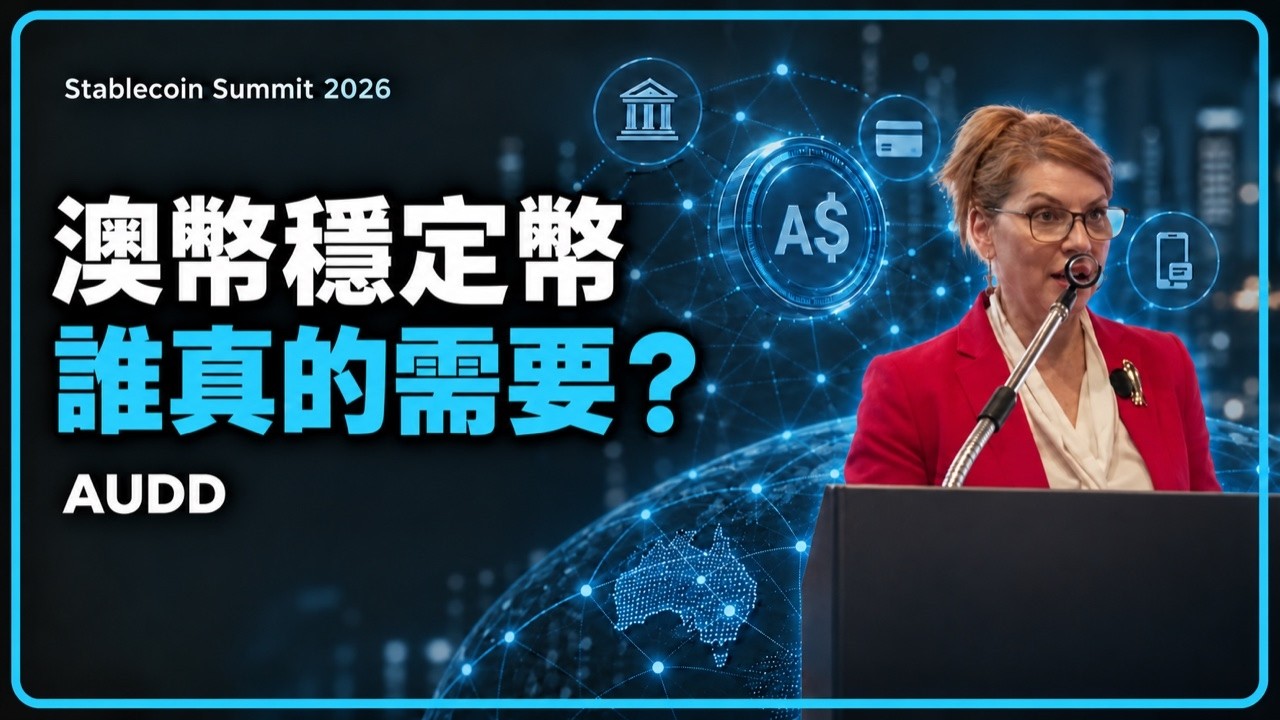
穩定幣脫鉤時,能找誰兌回?
Deposit tokens vs stablecoins
- Tesa Ho Flashbots
- Andrew O’Neill S&P Global Ratings
- Jacob Laufer M0
- Winston Hsiao XREX Group 共同創辦人暨集團風控長
影片
影片與逐字稿來源:Stablecoin Summit 直播
從 7:20:13 開始播放
場次摘要
這場座談比較代幣化存款與準備金支持的穩定幣。S&P 的 Andrew O'Neill 指出,代幣化存款仍是對發行銀行的存款請求權,主要承擔銀行信用風險;穩定幣則要看準備金是否足夠、能否及時變現,以及市場價格是否偏離面額。XREX 的 Winston Hsiao 補充,平時使用者常只看流動性和通路,一旦市場緊張,法律上究竟能向誰要求兌回,就會變得重要。
值得記下的 5 件事
- 代幣化存款主要服務銀行內部體系;穩定幣則供更多人在公鏈流通。
- 代幣化存款承擔銀行信用風險;穩定幣則要看準備金兌回能力與次級市場價格。
- 足額準備金不等於隨時有兌回現金,銀行休息時仍可能出現價格波動。
- 平時使用者看流動性與通路,市場壓力升高時才會追問兌回的法律權利。
- 銀行若改推第三方穩定幣,可能失去交易資料與把存款轉成信用的業務關係。
逐字稿
開場:代幣化存款與準備金穩定幣
大家好。你們都撐過來了。差不多要結束了。我們會盡量準時。我是 Tesa Ho,整個活動裡我注意到唯一用 NFT PFP 的人。我是 Flashbots 的市場研究主管,Flashbots 是一家 Ethereum 機構,我是說,基礎設施供應商。我們做區塊建構跟 PBS。接下來請與談人自我介紹。Andrew O'Neill,S&P Global Ratings 數位資產分析主管。Hello. You guys have made it. You're almost to the end. We're going to try to keep it on time. I'm Tesa Ho, the only person with an NFT PFP. I've noticed at this entire event. I'm the head of market research for Flashbots, which is an Ethereum institutional, I mean, infrastructure provider. We do block building and PBS. I'll have my panelists introduce themselves. Andrew O'Neill, analytical lead for digital assets at S&P Global Ratings.
我們做穩定幣的風險評估、代幣化金融商品的評等,而上週一我們宣布了新產品,是去中心化借貸裡金庫的風險評估。大家好,我是 Jacob Laufer。我是 M0 的成長長。我們是穩定幣基礎設施公司。我們協助穩定幣發行商。我們提供智能合約跟軟體,讓他們發行穩定幣,包含受監管的,你知道,在岸的 GENIUS,也包含離岸。We do risk assessments on stablecoins, ratings on tokenized financial instruments, and as of last Monday, we announced our new product, which is a risk assessment on vaults in decentralized lending. Hello, Jacob Laufer. I'm the Chief Growth Officer at M0. We're a stablecoin infrastructure company. We help issuers of stablecoins. We provide smart contracts and the software for them to issue stablecoins, both regulated, you know, GENIUS onshore, and also offshore.
我們也幫既有的穩定幣打造平台,把它們變成開發者平台,讓 builders 可以在上面做客製化穩定幣。最後,我們做一層 orchestration,為我們協助發行的所有穩定幣提供流動性。大家好,我叫 Winston。我是 XREX 的共同創辦人暨集團風控長。XREX 是一家支付公司。我們專做 B2B 大宗商品支付跟供應鏈金融。好。開始吧,Andrew。We build platforms for existing stablecoins to turn them into developer platforms to allow builders to build custom stablecoins on top of that. And finally, we build an orchestration layer to provide the liquidity for all the stablecoins that we help to issue. Hi, everyone, my name is Winston. I'm the co-founder and Group Chief Risk Officer of XREX. So XREX is a payment company. We specialize in B2B commodity payment and supply chain finance. Cool. To kick this off, Andrew.
能不能請你說明代幣化存款跟準備金穩定幣的差別,然後再講,如果大型穩定幣脫鉤會怎樣,對比銀行代幣化存款會怎樣?好,那我先從它們相同的地方講起。它們想達成的事情是一樣的,就是在區塊鏈上代表某一個貨幣單位。Would you mind explaining the difference between tokenized deposits and reserve-backed stablecoins, and then dive into what would happen if a major stablecoin depegs versus what would happen for a bank tokenized deposit? All right, so I think maybe I'll start by saying what unites them in terms of how they are the same. They are trying to achieve the same thing, which is to represent a unit of a given currency on a blockchain.
封閉體系對上公開流通
先把那個很上層的共通點放一邊,它們提供的功能其實很不一樣,所以用途也會差很多。代幣化存款是設計來在銀行的封閉體系裡運作的,所以是服務銀行對客戶提供的內部銀行業務,同時也幫這些客戶接到代幣化金融的其他領域。穩定幣這種工具,在設計上就是開放Now, looking past that very high-level point, they provide very different functionality and will therefore have very different use cases. Tokenized deposit is something that is designed to work within the closed ecosystem of a bank, and so to serve internal purposes in terms of the banking services that a bank provides clients, as well as helping those clients to link up with other areas of tokenized finance. Stablecoins are instruments that are, by design, open-
循環的,所以預期是在公鏈上流通,適用的場景也不限於任何特定機構的範圍。所以它們服務不同目的,兩邊都會存在,就是看哪個場景用哪個比較適合。從風險角度看,重要的是搞清楚它們實際怎麼運作、它們到底是什麼。所以穩定幣一般是十足準備的工具。loop, and so intended to circulate on public blockchains and to apply to use cases that are not restricted to the universe of any specific institution. So they serve different purposes, and so they will both exist, and it will be a matter of horses for courses. From a risk perspective, it's important to understand how they actually operate and what they are. So a stablecoin is generally a fully reserved instrument.
穩定幣看準備金,存款看銀行信用
這些年有各種東西自稱穩定幣,也用複雜程度不一的方式想達到那個目標。我們現在看全球主要法域已經出現的監管標準,講的通常是由低風險、高流動性資產,以及受監管金融機構裡的現金,全額擔保的工具,而且持有方式是要把穩定幣發行商的破產風險隔離開來。銀行的代幣化存款是另一回事。Different things have called themselves stablecoins over the years and tried to get there in varyingly complex ways. When we now look at the regulatory standards that have emerged in key jurisdictions globally, we're generally talking about instruments that are fully backed by low-risk, highly liquid assets, as well as cash in regulated financial institutions, and held in a way that is intended to be segregated from the insolvency risk of the stablecoin issuer. A bank's tokenized deposit is something different.
它不多不少,就是發行銀行的風險。所以它就是存在那家銀行的存款,用鏈上來代表,承擔的是這家銀行的信用風險。所以講到穩定幣的脫鉤風險,我們講的可能是兩件事。一是發行商有沒有能力贖回,這其實就是準備金夠不夠、能不能及時賣掉來應付贖回,以及這枚穩定幣在次級市場的價格。而當我們講的是It is nothing more or less than the risk of the issuing bank. So it is a deposit held at that bank, represented on chain, and is subject to the credit risk of the bank. So to the extent, when we talk about depeg risk in a stablecoin context, we're talking about potentially two things. One, the issuer's ability to redeem it, and so that's really the sufficiency of reserves and whether they can be sold in time to meet redemptions, as well as the secondary market price of that stablecoin. Whereas when we're talking
代幣化存款可能無法跟它所反映的那個貨幣維持一比一,那裡講的就是發行銀行的信用風險,例如那家銀行可能陷入無力清償。好。Jacob,M0 已經存在一段時間了,尤其用加密貨幣的時間尺度來看,也經歷過很多波動週期。市場信用緊縮的時候,實際會發生什麼,我是說,穩定幣要贖回,跟代幣化存款比起來,流程上會怎樣?about the risk of a tokenized deposit not being worth one-to-one with whichever currency it's reflecting, there we're talking about the credit risk of the issuing bank, and so a potential insolvency scenario of that bank, for example. Cool. Jacob, M0 has been around for a while, especially in crypto terms, and has seen a lot of volatile cycles. What exactly happens during, I say, like, a market credit crunch, and what happens logistically for a stablecoin to be redeemed versus a tokenized deposit?
對。代幣化存款這邊,我不確定我們看過夠多週期,真的能下結論。但我可以,你知道,推測一下可能會是什麼樣子。穩定幣這邊,其實,我覺得它隨著週期已經變了。所以我覺得,Andrew 剛剛也提到,這些年我們看過很多東西自稱穩定幣,以前有些可能是,你知道,內生擔保品。我們看到信用緊縮、東西乾掉的時候,那個擔保品其實會歸零。Yeah. Well, on the tokenized deposit side, I'm not sure that we've seen enough, like, cycles on that side to really say. But I can, you know, posit what it might look like. On the stablecoin side, it's really, I think it's changed over the cycles. So I think, as Andrew alluded to, we've seen a lot of different things call themselves stablecoins over time, things that in the past maybe had, you know, endogenous collateral. We saw that as things dried up in a credit crunch, actually that collateral went to zero.
監管穩定幣的風險轉向流動性與時段
所以穩定幣大幅脫鉤,有些情況也歸零了。我覺得產業已經過了那個階段,現在穩定幣,不管是,你知道,在 GENIUS 還是 MiCA 還是其他監管制度底下,我們已經走到一個地方,穩定幣現在被理解成,就像 Andrew 說的,其實是有流動性擔保的十足準備資產,不管是現金、公債、貨幣市場之類,或者,你知道,取決於實際是哪種貨幣,對,在當地法域那些擔保是什麼。And so the stablecoin depegged massively, and in some cases also went to zero. I think we're past that part of the industry now, where stablecoins, whether they're, you know, under, like, GENIUS or MiCA or other regulatory regimes, we've come to a place now where stablecoins are now understood, as Andrew said, are really fully reserved assets with liquid backing, whether that's cash, Treasuries, money markets, etc., or, you know, depending on the actual currency, right, what those are in the local jurisdictions.
所以隨著時間,這比較不是清償問題,比較是流動性問題,對吧?所以。取決於市場開盤時段,在盤中,就算遇到信用緊縮,這些市場流動性其實非常高,對吧?以現在穩定幣的規模,你動不到公債市場,對吧?你應該可以按市價把這些東西賣掉,整筆都能按面額拆掉。And so it really becomes less of a solvency issue and more of a liquidity issue over time, right? So. Depending on market hours, within market hours, really, even within a credit crunch, these are extremely liquid markets, right? So where the size of stablecoins are today, you're not going to affect the Treasury market, right? You should be able to liquidate these things really, you know, at a market price and be able to unwind the entire thing at par.
有意思的事情其實發生在盤後,你會看到,取決於贖回那一方的時間偏好,價格會波動。有時候造市商會在某個價格進場,把那個缺口補上。但真的,我覺得我們已經過了會看到那種非常、非常嚴重壓力的階段,就算像 2023 年 USDC 那樣,當時 Silicon Valley Bank 有潛在清償疑慮。而我覺得在The interesting thing happens really in off-market hours, where you can see, depending on the time preference of the, you know, the one redeeming, you can see fluctuations in price. And sometimes a market maker may step in at a certain price to fill that gap. But really, I think we've gotten past the point where you're going to see, like, massive, massive, like, distress, even as we saw in 2023 with USDC, where we had, like, potential solvency concerns around Silicon Valley Bank. And I think on—
代幣化存款這邊,其實風險可能比較大,真的要看發行這枚代幣化存款的金融機構,對吧?因為那種情況,你承擔的其實就是銀行資產負債表,如果那邊發生某種緊縮,你知道,我們再看。我覺得我們還沒真正見過,但我覺得最後大概會看到代幣化存款的某種信用風險,就像一般商業存款一樣。on the tokenized deposit side of things, actually, there might be more risk, really depending on the financial institution that's issuing this tokenized deposit, right? Because in that case, it really is the balance sheet of the bank that you're underwriting, and if there is, you know, some sort of crunch there, you know, we'll see. I think we haven't really seen it yet, but I think we probably will see eventually some kind of credit risk around tokenized deposits, just as you would any, really, commercial deposit.
這剛好接到我要問 Winston 的問題。Winston,XREX Pay 有很多跨境支付。你們客戶對穩定幣或代幣化存款背後的請求權,有沒有偏好?他們要公債,還是銀行信用也可以?我會說有,但只在真正要緊的時候。對。所以我覺得日常來說,沒有使用者早上起來會開始想,我手上這枚法幣代幣到底是什麼?That is a good segue to my question for Winston. Winston, with XREX Pay, you have a lot of cross-border payments. Do your customers have a preference for the claim behind either stablecoins or tokenized deposits? Do they want Treasuries, or are they okay with, like, bank credit? I'd say yes, but only when it matters. Yeah. So I think on a daily basis, no user will wake up in the morning and start wondering, like, what is the fiat token that I'm holding?
壓力來了,法律請求權才決定信任
法律請求權是什麼?但市場承壓的時候,法律請求權就變得非常重要。好,也許是銀行危機,也許是脫鉤,甚至是監管介入。這個時候使用者通常會問,法律請求權是什麼?好,我什麼時候、怎麼、在哪裡可以把法幣要回來?所以我會說,景氣好的時候,流動性跟網路、通路網路,決定人們用哪一種錢。但景氣差的時候,What is the legal claim? But the legal claim becomes extremely important when there is market stress. Okay, so maybe a banking crisis, or maybe a depeg, or maybe even regulatory intervention. And this is a time that users will usually ask, what is the legal claim? Okay, and when and how and where can I claim back to my fiat? So I would say, in a good time, the liquidity and the network, the distribution network, determines what money people will use. But then in a bad time,
是法律請求權決定人們會信任哪一種錢。對,所以我覺得,是的,我的答案是有,但只在真正要緊的時候。對。這樣講合理。好,Jacob,回到你。我們看到穩定幣跟代幣化存款的興趣都變多了。如果你是機構或企業,你會選哪一種,他們決策會看哪些因素?這問題很有意思。我覺得,以金融機構來說,可以從幾個不同角度看。it is the legal claim that will determine which money people will trust. Yeah, so I think, yes, my answer is yes, but only when it matters. Yeah. That's fair. Okay, Jacob, going back to you. We're seeing a lot more interest in stablecoins and tokenized deposits. If you're an institution or an enterprise, which one would you choose, and what kind of factors go into their decision-making? It's a very interesting question. I think, as a financial institution, there's a few different ways to look at it.
有一種比較繞的看法是,某些金融機構其實想把資產放在資產負債表外。所以,這比較是以美國為中心,但是存款不到 100 億美元的銀行有某些豁免。你在很多跟 neobanks 做生意的 sponsor banks 身上會看到這個。因為 interchange 收費的方式,你其實會想限制自己手上的存款量。One kind of tricky way I'll look at it is that certain financial institutions actually want to hold assets off balance sheet. So, and this is more U.S. -centric, but there are certain exemptions for banks that have less than $10 billion of deposits. You see this in a lot of the sponsor banks that do business with a lot of the neobanks. Because of the way you can charge for interchange, you actually want to limit the number of deposits that you have.
所以其實,我覺得那類銀行,像一些中型的 sponsor banks,會很積極想發穩定幣,因為那真的會被當成表外。但這可能不是這個問題的本意。我覺得如果你看的是,你知道,已經超過 100 億美元存款門檻的銀行,真正的問題是你要不要用你的通路帶進新客戶,還是你想要And so actually, I think those kind of banks, like some of the mid-sized sponsor banks, I think, are going to be very keen to issue stablecoins because that is really going to be considered off-balance sheet. But that maybe is not in the spirit of the question. I think if you're looking, you know, at just a bank that maybe is already over the $10 billion deposit threshold, it's really a question of do you want to, like, use your distribution to bring in new customers, or do you want to
做大資產負債表,因為你的放款本業真的很賺錢。我覺得,對我來說,這才是主要問題。像 J.P. Morgan 這種銀行,對吧,目前選了代幣化存款這條路,因為他們顯然是放款本業,而且很會靠資產負債表賺錢,而其他銀行,我覺得會走穩定幣這條路,因為他們想,我覺得,擴大銀行的業務線。grow your balance sheet because your lending franchise is really that profitable for you. I think, to me, that's the main question. And a bank like J.P. Morgan, right, has chosen to do the tokenized deposit route for now because obviously they're a lending franchise, and they're able to monetize their balance sheet very well, while others, I think, are going to go the stablecoin route because they want to, I think, expand the business lines of the bank.
你剛好講到這個,其實幾個禮拜前我在一個活動上,有企業財務長問我:為什麼我該信任 Circle 的 USDC,而不是 J.P. Morgan 的 USDC?我要回到稍早講的,這些是服務不同目的的不同工具,所以 J.P. Morgan,Jacob 講得對,在代幣化存款產品上花了很多力氣。但當 J.P.Funny you should say that, actually, because I was at an event a few weeks ago where I was asked the question by a corporate treasurer: why should I trust Circle's USDC over J.P. Morgan's USDC? And I'll come back to the point that I made earlier that these are different tools that serve a different purpose, and so J.P. Morgan, as Jacob has rightly pointed out, has put a lot of effort into its tokenized deposit product. But when J.P.
Morgan 幾個月前發行代幣化基金時,那個基金用的是 Circle 的 USDC,因為它是開放循環工具,正好服務那個用途。所以我們想到這兩種工具未來會互動、會並存,代幣化存款對銀行有很多用途。它也提供一個入口,讓客戶有錢包,去接觸代幣化金融商品跟服務。但那枚穩定幣的存在,對銀行還是有用處。Morgan issued a tokenized fund a few months ago, that fund uses Circle's USDC because it is an open-loop instrument that serves that particular use case. And so when we think about these two different types of tools interacting in the future and coexisting, that tokenized deposit serves a lot of purposes for the bank. It also provides a gateway to give customers wallets and give them access to tokenized financial instruments and services. But there is still utility to the bank from the existence of that stablecoin.
Winston,新興市場銀行有沒有類似的情況?像是,他們想用 USDC、USDT,還是想自己發一種法幣美元穩定幣?我覺得,我覺得,對,支付很重要,但這真的不是銀行主要的獲利來源。所以……如果銀行只是叫使用者去用 USDT、USDC 這種穩定幣,他們等於直接讓出自己的本業,第一是準備金收益。好,第二是錢包或帳戶關係。Winston, do you find something similar in emerging market banks? Like, do they want to use USDC, USDT, or do they want to launch their own sort of fiat USD stablecoin? I think, I think, yes, payment is important, but this is really not the main profit that banks are operating from. So... If a bank asks the user to simply use the stablecoin like USDT, USDC, they're literally giving up their franchise of, first, the reserve profit. Okay, second, the wallet or the account relationship.
銀行若只推第三方穩定幣,會讓出準備金收益
那些都會沒了,可能連交易資料也會丟掉。這些都很重要。銀行真正在做的,是把存款轉成信用。他們就是做這個。他們在做信用創造。所以我覺得銀行去推穩定幣沒有道理。支付體驗可能會比較好。但長期來看,這真的不會走到,我是說,這不是銀行在做的事,好。That's going away, and potentially also lose the transaction data. And these are important. What bank really does is they actually transform the deposit into credit. That's what they do. They do credit creation. So I think it makes no sense for a bank to push over the stablecoin. It may give a better experience over the payment. But in the long run, it really does not go to—I mean, it's not what bank does, okay.
但如果銀行導入銀行存款,就能把銀行存款變成可程式化的錢。我們今天講的可程式化的錢:全天候、可互通。最後也最重要的是,它保住存款的形態。所以保住、留住再把存款轉成信用的能力。所以我覺得,我覺得,我看到的是,當然,如果我們在創造……如果區域銀行在創造銀行存款,那流動性還是王,對吧?But if a bank introduces a bank deposit, well, it will give the capability of transforming a bank deposit into programmable money. The programmable money we're talking about today: 24/7, interoperable. And last but the most important, it preserves the deposit form. So preserve the, retain the capability of transforming the deposit again into credit. So I think, I think, what I see is—but of course, if we are creating... If a regional bank is creating a bank deposit, then liquidity is still king, right?
所以東西要能當錢用。不能用,就不是錢。好,所以如果區域銀行在創造銀行存款,我覺得還是有限制,尤其是跨境。所以我覺得可以這樣說,我認為未來的架構應該是……銀行存款,好,加上穩定幣流動性,再加上本地法幣進出金的銀行設施。我覺得那會是未來的架構。對。So you can use things as money. If you can't use it, it's not money. Okay, so if a regional bank is creating a bank deposit, I think it still has its limitation, especially on cross-border. So I think it's fair to say that I believe the architecture in the future should be... Bank deposit, okay, plus the stablecoin liquidity, and plus the local fiat on/off-ramping banking facilities. I think that would be the future architecture. Yeah.
Andrew,你同意嗎,還是你覺得銀行去中介化會發生在,像美國?那會怎樣影響銀行信用評等?我們在幾個脈絡都發表過這個,包含新興市場跟美國特定情境。我們不見得看到大規模去中介化的威脅。會有一些潛在影響,你知道,如果你想到大量的,存款進入穩定幣,那會怎麼運作?Andrew, do you agree with this, or do you think bank disintermediation happens in, like, the U.S.? And how would that kind of affect the bank credit rating? So we've published on this in a couple of contexts, both emerging markets and U.S.-specific. We don't see, necessarily, a massive disintermediation threat. There is some potential effect that can come from, you know, if you think about large amounts of— Deposits that go into stablecoins, how would that work?
嗯,結果可能是那些發行商再把存款放在銀行。那就會是批發存款而不是零售存款,黏性可能比較低。但更根本、從上層來看,我們不太覺得存款會從銀行遷到穩定幣,因為說到底,我不會只因為聽起來很酷就把銀行帳戶換成穩定幣,對吧?重點是這個工具能拿來做什麼。能不能賺到收益?Well, it could result in those issuers then holding deposits at banks. That would be wholesale deposits rather than retail deposits, maybe less sticky. But thinking about it more fundamentally and at a high level, we don't really see the case for that migration of deposits outside of banks into stablecoins because ultimately, I'm not going to move my bank account into stablecoins just because it sounds cool, right? It's about what you can do with that instrument. Can you earn a yield?
穩定幣沒有收益。所以每個人都會把存款搬過去的這個想法,可能沒那麼有說服力。我們確實看到潛在影響的地方,是比較長期的故事,而且比較跟更廣的技術轉變趨勢交會,就是,銀行之間的競爭動態有可能改變,意思是有些銀行在適應新環境時會更往技術走。You don't earn a yield on a stablecoin. So this idea that everyone is just going to move their deposits into that is perhaps not that convincing. Where we do see potential impact is in this kind of longer-term story, and it kind of intersects more with broader technological shift trends, that— There is a potential for shifts in competitive dynamics between banks, in the sense that some may be more tech-forward in adapting to a new environment.
所以如果你真的看到代幣化快速發展,AI 那邊也一樣,顯然有些機構會比其他機構更有準備去適應那個趨勢。這當然不是眼前就會發生的因素。Winston,你很多客戶手上有穩定幣資金。他們有拿去當借貸擔保品嗎?他們拿它做什麼?有在 DeFi 裡想賺收益嗎?他們在做什麼,就只是抱著穩定幣?DeFi?他們在做什麼?就只是抱著穩定幣。So if you do see rapid development of tokenization, same on the AI front, clearly certain institutions may be better prepared than others to adapt to that trend. That's certainly not an imminent factor. Winston, a lot of your customers have stablecoin treasuries. Are they using it as collateral for lending? What are they doing with it? Are they trying to get yield from it in DeFi? What are they doing, just sitting on their stablecoins? DeFi? What are they doing? Just sitting on their stablecoins.
老實說,因為我們在 B2B 貿易金融這個領域,好,所以我們客戶通常是為了支付而來。他們為了支付而來,就不會要收益。但可以這樣說,市場上有些參與者會提供流動性。我們要的是流動性跟收益。對,而且有……一些方法,但穩定幣的準備金通常是用來支撐贖回作業,所以它們不是拿來做信用創造。Honestly, because we are in the B2B trade finance field, okay, so usually our customers, they are there for payment. So when they are there for payment, they are not asking for the yield. But it's fair to say that there are participants in the market that will provide liquidity. We're asking for liquidity and the yields. Yeah, and there are... ways that—but the reserve for the stablecoin is usually to support the redemption works, so they are not there for the credit creation.
所以第一層我們很難說可以提供收益。但在第一層外面,有幾種,有幾種方法可以創造收益。其中一件,當然是 DeFi,很單純。它是超額抵押。你質押,像是你的數位資產,然後借出也許是穩定幣,通常以穩定幣計價,也用穩定幣結算。但那通常是超額抵押,因為那是創造信用的一種方式So hardly we can say that on the first layer we can provide the yields. But there are only a few, there are a few ways that we can create the yield outside the first layer. So one of the things, of course, DeFi, it's very simple. It's over-collateralized. You pledge, like, your digital asset, and you borrow maybe stablecoin, usually stablecoin-denominated, and also settle in stablecoins. But that's usually over-collateralized, because that's one way of creating the credit
也創造收益。但我覺得那有點,像是,沒效率。好,所以這是第二種,我覺得值得我們去想,尤其在我這個領域。那就是機構放款、有擔保放款。好,想像像我們這種公司,我們在做支付。所以我們有資金支付需求的流入跟反向流,也許進印度、出印度。所以假設我收到一美元,好,對應盧比的需求。and creating the yields. But I think that's a kind of, like, inefficient. Okay, but so this is the second type, I think, worth for us to think about, especially in my field. So that would be institutional lending, secured lending. Okay, so imagine a company like us, we're doing payments. So we have an inward flow and reverse flow for the money payment demand, maybe to India and out of India. So let's say if I receive a dollar, okay, for rupees, the demand.
如果我跟央行或 RBI 一對一結算,我就失去那一美元。對,我結算了盧比。但如果我現在又有盧比換成美元的需求呢?我不一定拿得回同一美元。所以這裡我們可以做的是,把我的穩定幣拿去抵押,然後我去借盧比,對吧?穩定幣還是我的。我只是在借盧比。這樣一來,只要有反向需求,我就可以把同一筆盧比還回去,把穩定幣拿回來。If I settle that one by one with the central bank or RBI, then I'm losing that dollar. Yes, I settle rupees. But what if I have the rupees demand for dollar again now? Not necessarily I can get back the same dollar. So in here, what we can do is we can collateralize my stablecoin and I borrow the rupees, right? So the stablecoin is still mine. I'm just borrowing rupees. So in this way, whenever I have the reverse demand, I can give back the same rupees and take back my stablecoin.
不只這樣,它也提供更好的兌換保證。也許我避開了本地貨幣貶值的波動。所以我覺得這是另一種方式,好。在真正、真正的貿易金融裡,我們可以想怎麼透過穩定幣擔保,把收益提供給人。對。Jacob,你在 M0 看到什麼?客戶有在要生息機會嗎?他們要生息穩定幣嗎?你看到什麼?有。有。有。不,我覺得你必須畫一條Not just that, it provides better conversion guarantee also. Maybe I avoid the volatility of the local currency depreciation. So I think this is another way, okay. In real, real trade finance, we can think of how can we provide yields to the people through stablecoin collateral. Yeah. Jacob, what are you seeing at M0? Are your customers asking for yield-bearing opportunities? Do they want a yield-bearing stablecoin? Like, what have you seen? Yes. Yes. Yes. No, I think you have to draw a
線,區分給終端使用者的收益,這正在被監管到幾乎消失,以及 B2B 意義上的收益。我覺得 B2B 這邊的需求只會增加,因為掌握使用場景的通路商,因此也在增加穩定幣供給,他們會越來越常去找那些發行商,要求切一塊淨利息。所以對我們 M0 來說,我們真的是 B2B 或 B2B2C,很多客戶在找生息資產。line between yield to end users, which is being regulated out of existence, and yield in a B2B sense. And I think the demand in the B2B sense is really just only going to increase as distributors who control a use case and are are therefore increasing the supply of a stablecoin are going to increasingly go to those issuers and demand a cut of the net interest. And so, for us, M0, we're really B2B or B2B2C, and a lot of our customers are looking for yield-bearing assets.
現在,今天剛好也有很多 crypto-native 的使用場景跟離岸場景,這在那邊完全不是問題,收益可以來自各種來源。但我覺得就算,你知道,在岸跟受監管市場,我們客戶其實會要求拿走絕大部分收益,而且他們會拿到。Andrew,大概最後一個問題給你。S&P 怎麼評估,我猜,鏈上市場裡的槓桿?像是,你會看到更多穩定幣進來。Now, today, it also happens to be a lot of crypto-native use cases and offshore use cases where this is really not problematic at all, and the yield can come from various sources. But I think even, you know, onshore and regulated markets, our customers are going to demand the vast majority of the yield, actually, and they're going to get it. Andrew, probably one of the last questions for you. How does S&P evaluate, I guess, the leverage within on-chain markets? Like, you're going to see more stablecoins onboard.
你已經知道 degens 在 looping。你知道,資金部位希望不會 loop。但你怎麼跨這麼多條鏈去追蹤?我覺得 DeFi 裡的 looping,你知道,顯然是終端使用者風險的一個潛在來源。我覺得在我們剛宣布的金庫風險評估產品裡,金庫內部可能有 looping 這個想法,大概會是重大關切,也需要在鏈上追蹤。一般來說,looping 是發生在金庫本身外面。You already know that degens are looping. You know, treasuries hopefully won't loop. But how do you track it across all these different chains? I think looping in DeFi is, you know, clearly a potential source to end-user risk. I think in the vault risk assessment product that we've just announced, that idea that you may have looping within a vault would probably be something that's of significant concern and something that needs to be tracked on-chain. Generally, looping is happening outside of the vault itself.
所以使用者在把槓桿堆起來,再投回金庫。我覺得加密市場裡我比較擔心的槓桿,整體來說是在永續合約那邊。所以當我們看到永續合約上承擔了非常大量的槓桿,而且那些合約的擔保品又跟被追蹤的資產相關,那就會立刻導向清算。這導致了很多清算崩盤So users are building up their leverage and deploying that back into vaults. I think the leverage that I'm more concerned about in crypto markets more generally is on the perp side. So when we're seeing very significant amounts of leverage being taken on in perps in such a way that the collateral against those contracts is correlated to the asset that's being tracked, that leads to imminent liquidations. That's led to a lot of the liquidation crashes
我們見過的那些,你知道,回推到,等一下,今天幾號?剛好滿一年嗎?10/10?不是。快了。不對,抱歉,是 8/10。好,差不多剛好一年前的今天,我們遇到 10/10 那次崩盤,是被永續合約市場大量清算推出來的。從那之後也有幾個比較小的案例。所以那一塊我猜我會多盯一點。好。最後發言。各位對明年有什麼預測?that we've seen, you know, going back to—wait, what's the date today? Is it exactly a year? 10/10? No. Almost. No, sorry, it's 8/10. Okay, well, almost exactly a year ago today, we had that crash on 10/10 that was driven by, you know, heavy liquidations coming from the perp market. We've had a few kind of smaller cases since then. And so that's the part that I guess I'm keeping an eye on a bit more. Okay. Final statements. What are your predictions for the next year?
各位對穩定幣、代幣化存款的看法,就是大致上的想法?Jacob,你要先講,還是?我可以先講。好。所以我覺得在比較企業、機構這一側,我們看到的穩定幣,我會說比較還在試點階段。我們看過很多宣布,但還沒有大規模採用。我覺得大家在等清楚的規則。What are your thoughts on stablecoins, tokenized deposits, just in general, your thoughts? Jacob, want to go, or? I can go first. Okay. So I think on the more enterprise institutional side, we have really seen stablecoins, I would call it more in a pilot phase. We've seen a lot of announcements, but there hasn't been major adoption. I think people were waiting for clarity.
現在這件事暫時定下來了,我們會跟主管機關往前走、做規則制定,終於會看到第一批真正的使用場景,企業使用場景會爆發,但我也覺得在鏈上 crypto-native 這一側,資本形成這個領域的使用場景,我覺得會增加十倍。所以這有點像,私募信貸從全球使用者基礎募集資金,這才是 DeFi 的本質。Now that that is settled for now, we're going to move forward with the agencies, with rulemaking, and we're finally going to see the first, like, real use cases, and an explosion of enterprise use cases, but also I think on the on-chain crypto-native side, use cases in the capital formation space, I think are going to increase by tenfold. So this is kind of this, like, private credit sourcing capital from a global user base, really the essence of DeFi.
我們對那塊成長真的很興奮。Winston,丟你的 alpha。我覺得我們會看到很多本地貨幣的代幣化銀行存款,不是美元。好,我覺得這會發生。以美元計價這邊,我覺得穩定幣還是會主導。所以兩者之間的互動、互通,會大幅幫到我這個產業,也就是 B2B 跟融資這一側。所以我蠻興奮的。我確實相信它要來了。Andrew。We're really excited about that growth. Winston, drop your alpha. I think we're going to see a lot of tokenized bank deposits in a local currency, not the U.S. dollar. Okay, I think that's going to happen. And in terms of the U.S. dollar-denominated, I think stablecoins will still be dominant. So that interaction, interoperation between both of them is going to really help my industry, which is the B2B and the financing side, in a big way. So I'm quite excited about it. I do believe it's coming. Andrew.
所以我覺得,你知道,我們看到 GENIUS 去年夏天立法通過,還沒完全生效,要到明年一月。所以以穩定幣實際量能跟使用場景來說,我們其實還沒看到 GENIUS 的影響。所以我預期接下來 12 個月會看到,穩定幣開始在代幣化金融商品裡讓人感覺到它的存在,尤其是美國市場進入……2027 年。So I think, you know, we saw GENIUS passed into law last summer, not yet fully effective until— until January next year. So in terms of, like, actual volumes and use cases for stablecoins, we've not really seen the impact of GENIUS yet. So what I would expect to see over the next 12 months is that stablecoins start to make their presence felt in tokenized financial instruments, particularly in the U.S. market going into... 2027.
所以我們評等過少數幾檔用穩定幣運作的代幣化基金,我們預期這類市場到 2027 年會成長。我會說,你知道,我們現在不在美國。我們在新加坡。MAS 最近一次諮詢裡,有一句很有意思的評論。關於,你知道,受良好監管的穩定幣可以作為鏈上結算的可信工具。所以這也可能是我們在美國以外會看到的趨勢。So we've rated a handful of tokenized funds that work off of stablecoins, and we'd expect to see that kind of segment grow into 2027. I would say, you know, we're not in the U.S. here. We're in Singapore. In a recent consultation from the MAS, there is a very interesting comment. About, you know, well-regulated stablecoins being a credible tool for on-chain settlement. And so that could be a trend that we see outside of the U.S. as well.
而且,你知道,尤其在新加坡這裡,我預期一開始的步調,這麼說吧,還是得先從美國過來。就這樣。謝謝大家。謝謝我們的與談人,也謝謝各位留下來,差不多把星期四熬完了。謝謝。And, you know, particularly here in Singapore, I would expect the initial kind of, let's say, pace has to come from the U.S. first, then. That's it. Thanks, everyone. Thanks to our panelists, and thank you guys for hanging out and almost finishing your Thursday. Thank you.